
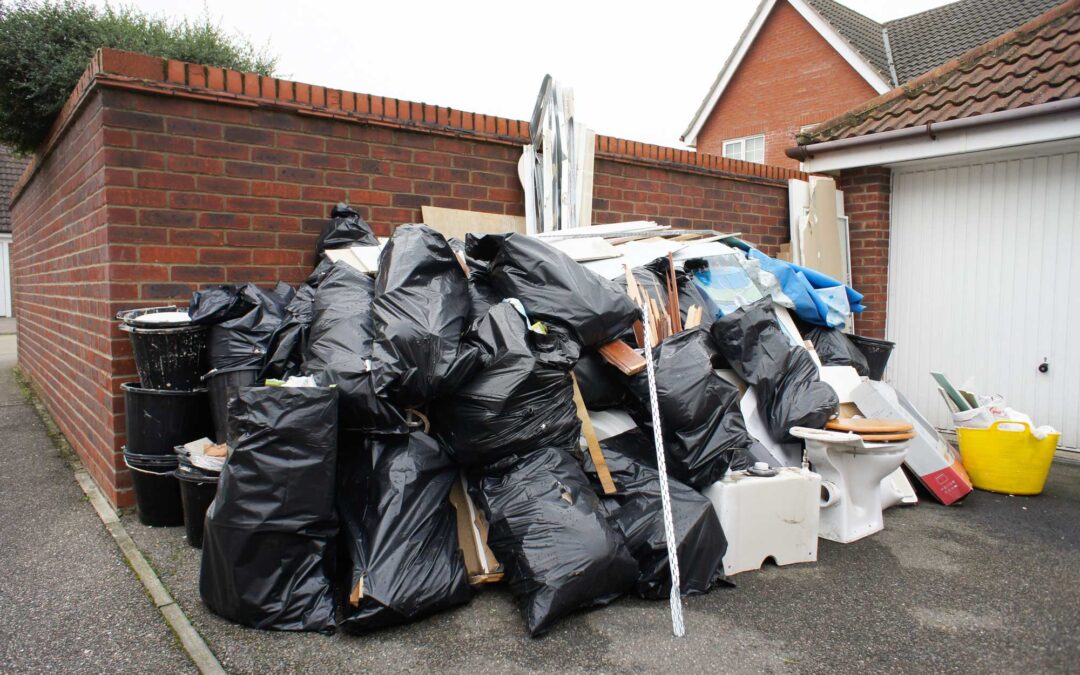
One of the most common questions before arranging a waste clearance is simple: what can actually be taken away?
Professional waste clearance can cover a wide range of unwanted household and commercial items, from furniture and appliances to garden waste, garage contents and general rubbish. However, not everything can be loaded into a clearance van and handled in the same way.
Some materials are hazardous, restricted or require a specialist disposal process. Knowing the difference before collection helps you describe the job accurately, avoid surprises on the day and arrange the right service for anything that needs separate handling.
The Quick Guide To What We Can Collect
For most straightforward clearances, G&L Waste Solutions can remove general non-hazardous rubbish that can be safely and legally transported in our vans.
This can include:
- Unwanted furniture
- Household appliances
- General household rubbish
- Bulky household items
- Garage contents
- Garden waste
- Unwanted garden furniture
- Boxes and accumulated clutter
- Office furniture and equipment
- Shop and commercial property contents
- Suitable waste from property clear-outs
- Single unwanted items through to larger loads
Some items cannot be included in our standard clearance service. These include asbestos and hazardous materials. Confidential waste is also not a service we provide.
Needles and sharps require a different approach. They require specialist handling rather than being mixed with ordinary rubbish, which is why we provide a separate needle & sharps disposal service.
If you are unsure about a particular item, the safest approach is to tell us about it when requesting your quote rather than assuming it can be collected.
Household Items We Regularly Clear
Most domestic clearances involve a mixture of everyday belongings rather than one single type of waste.
You might be decluttering after several years in a property, getting ready to move, clearing unwanted belongings after a tenancy or simply trying to reclaim space that has gradually filled with things you no longer need.
Furniture & Bulky Items
Furniture is one of the most common reasons people arrange a clearance.
Depending on the job, unwanted items can include:
- Sofas
- Beds
- Wardrobes
- Tables and chairs
- Cabinets
- Shelving
- Other unwanted household furniture
These items can be awkward to move without suitable help or transport. With our domestic rubbish clearance service, our team handles the lifting and loading as part of the collection.
You do not normally need to carry everything outside before we arrive. Let us know where bulky items are located, particularly if there are stairs or other access considerations.
Appliances & Household Rubbish
Clearances can also include unwanted household appliances and general rubbish.
The important point is that an appliance or electrical item should not automatically be treated in exactly the same way as an ordinary bag of household waste. Different materials can require different processing once they have been collected.
When requesting a quote, mention larger appliances and unusual electrical items rather than simply describing everything as general rubbish. This gives us a clearer idea of what the collection involves.
Full Property Contents
Sometimes the job involves considerably more than a few individual items.
Our house clearance service can cover full or partial property clearances for homeowners, landlords and property professionals.
These jobs may involve furniture, appliances, boxes, everyday belongings and accumulated general waste spread across several rooms.
Where a property is being cleared following a bereavement, we also provide a dedicated probate clearance service for families, executors, solicitors and other property professionals.
What About Garden & Garage Waste?
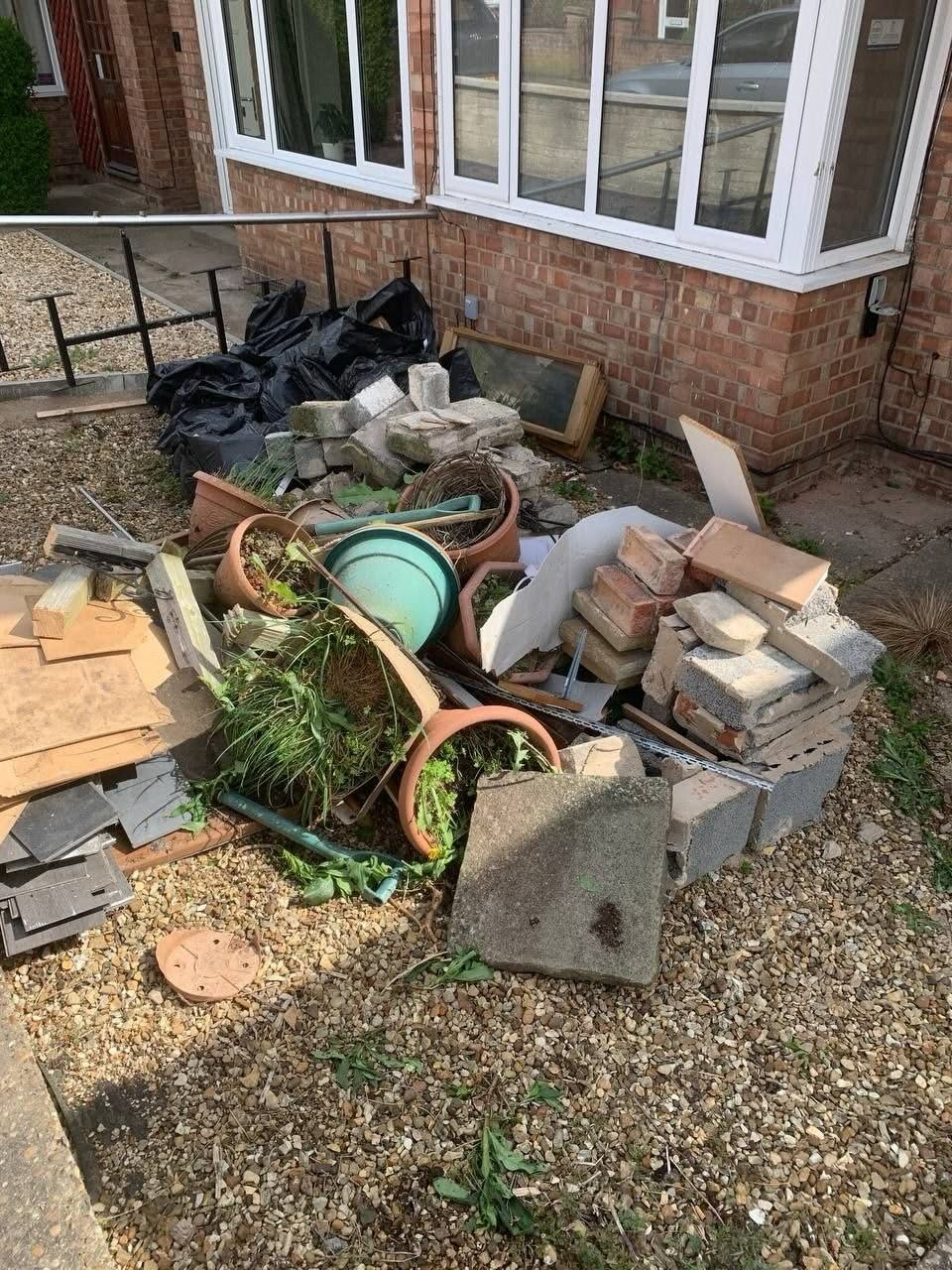
Garden and garage clearances often contain a much wider mixture of materials than customers initially expect.
A garage, for example, might contain furniture, boxes, bicycles, tools and years of accumulated clutter. A garden clear-out might combine green waste with old furniture and other unwanted outdoor items.
Our garage clearance service can help remove suitable unwanted contents from full or partial garage clear-outs.
Our garden clearance service covers green waste, unwanted garden furniture and general outdoor rubbish suitable for our collection service.
The key is to tell us what is actually there. A few bags of garden waste can be very different from a garden containing large quantities of mixed rubbish or unusually heavy materials.
Photographs can be particularly useful when requesting a quote because they allow us to see the type and approximate volume of waste involved.
What Can Be Removed From Commercial Premises?
Commercial clearance can involve everything from unwanted desks and chairs to the contents left behind when premises are vacated.
Our commercial rubbish clearance service supports businesses, landlords, property managers and organisations with suitable non-hazardous waste from commercial properties.
Depending on the premises, this can include:
- Office furniture
- Desks and chairs
- Shelving
- General non-hazardous rubbish
- Suitable unwanted equipment
- Contents from shops and retail premises
- Furniture and materials from commercial clear-outs
G&L also provides dedicated office clearance, shop clearance, factory clearance and school clearance services.
Commercial customers should be particularly clear about anything unusual within the waste. A pile of office furniture is very different from unknown chemicals, industrial liquids or confidential documents.
If you are unsure what a larger commercial clearance contains, discussing the job beforehand can help identify anything that needs a different disposal route.
What Can't Go Into A Standard Waste Clearance?
Just because an item needs disposing of does not mean it can be added to an ordinary clearance load.
Some waste presents additional risks or is subject to different handling requirements.
Asbestos
G&L does not provide asbestos removal.
If you know or suspect that material contains asbestos, do not include it with ordinary rubbish or assume a general clearance company can take it.
It needs to be dealt with through an appropriate specialist route.
Hazardous Materials
Our standard rubbish clearance service does not cover general hazardous materials.
This distinction matters because hazardous waste cannot simply be mixed with household or commercial rubbish just because it is located at the same property.
If you find unidentified chemicals, liquids or other materials you believe may be hazardous, tell us before the collection rather than placing them amongst the items to be cleared.
Confidential Waste
We do not provide confidential waste disposal.
Businesses clearing offices or other commercial premises should therefore separate confidential documents and other material requiring secure destruction from the general items being collected.
This is particularly important before an office move or full commercial clear-out, when ordinary furniture and rubbish may be mixed with paperwork requiring a different disposal service.
Are Needles & Sharps Collected With Normal Rubbish?
No. Needles and sharps should not simply be added to an ordinary rubbish clearance.
G&L provides a separate specialist service for appropriate properties and sites where needles or sharps need to be dealt with.
This may be relevant to landlords, property managers and commercial clients who discover discarded sharps while taking control of or clearing a property.
If needles or sharps are present, tell us before arranging the clearance so the appropriate service can be discussed.
You can find further information on our needle & sharps removal service.
Why Does The Type Of Waste Matter?
Two clearances that occupy roughly the same amount of space can be very different jobs.
A van containing furniture and cardboard does not present the same handling requirements as a load containing very heavy materials, electrical items or waste that may be restricted.
Knowing what you have helps with:
- Determining whether we can collect it
- Understanding the likely size of the job
- Identifying specialist items beforehand
- Providing a more useful quotation
- Planning access and loading
- Avoiding restricted items being discovered during the clearance
This is why a description such as "a van full of rubbish" does not always tell the whole story.
The amount matters, but so does what the waste actually consists of.
How To Prepare Before Booking A Clearance
You do not need to catalogue every bag and box before getting in touch, but a little preparation can make arranging a collection much easier.
Separate Anything You Are Keeping
Make it clear which items should remain at the property.
This is especially useful during full house clearances, probate work and larger commercial jobs where wanted and unwanted possessions may still be in the same rooms.
Identify Anything Unusual
Look for anything that may need specialist handling.
If you see asbestos, chemicals, sharps or another potentially restricted material, mention it before collection.
Do not hide unusual items amongst general rubbish in the hope that they can simply be taken with everything else.
Take Clear Photographs
Photographs are a useful way to show us what needs removing.
For a larger job, photograph each relevant room or area rather than trying to fit the entire clearance into one image. This gives us a better idea of the volume and mix of items involved.
Explain Any Access Issues
Tell us if the waste is upstairs, in a loft, at the back of a property or somewhere with restricted vehicle access.
Our team handles the lifting and loading, but knowing about access beforehand helps us understand the practical requirements of the clearance.
Do You Need To Sort Everything Yourself?
Not necessarily.
You do not need to carry all the rubbish outside or load it into a skip before we arrive. G&L's clearance service includes the agreed lifting and loading.
What is useful is separating anything that must stay and identifying items that could fall outside a standard clearance.
For example, if a garage contains ordinary clutter alongside unidentified chemicals, tell us rather than mixing everything together. Similarly, needles or sharps should be raised beforehand because they require a separate specialist service.
A little information before the job can prevent a lot of uncertainty once the clearance begins.
What Happens To The Waste After Collection?
Removing rubbish from a property is only one part of responsible waste clearance.
G&L is a licensed and insured waste clearance company. Once waste has been collected, we aim to recycle or reuse as much as possible and use appropriate waste transfer facilities for responsible processing and disposal.
Different materials may therefore be dealt with in different ways rather than everything simply being treated as one undifferentiated load.
For the customer, the important step is being accurate about what needs removing so suitable waste can be collected through the correct service.
Unsure Whether We Can Collect Something?
Waste clearance covers far more than black bags and everyday rubbish, but there are sensible limits on what can be included in a standard collection.
The easiest approach is to tell us exactly what you need removing. For straightforward jobs, photographs can help us assess the type and amount of waste. For larger or more involved clearances, a free property visit can also be arranged where appropriate.
If you have household rubbish, unwanted furniture, garden or garage contents, or a larger property clearance to organise, contact G&L Waste Solutions to discuss what needs removing. We can explain what our service can cover and provide a free, no-obligation quote.