

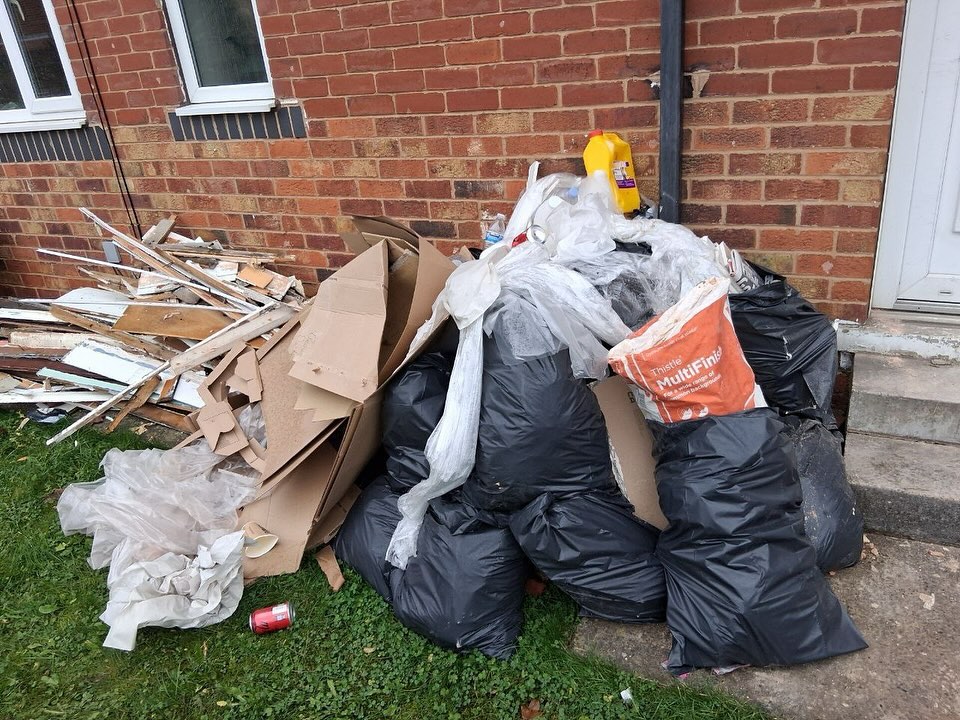
If you have never arranged a house clearance, it can feel like an overwhelming and incredibly inconvenient task that you want to delay. We see this all the time. People call us unsure of where to start, worried about cost, unsure what happens to their belongings, or simply not knowing what the process actually involves.
So let us walk you through it properly.
From our experience operating as a house clearance company across Nottinghamshire, house clearances are rarely just about removing furniture. They usually come with a story. Downsizing, probate, end of tenancy, relocation, or sometimes just years of accumulation.
This guide explains what really happens during a full house clearance service, step by step, from our perspective.
Why Do People Need a House Clearance In The First Place?
Our neighbouring city has a strong rental market due to the University of Nottingham and Nottingham Trent University. That means we attend regular end-of-tenancy clearance jobs. There is also a large number of older properties in areas like Sherwood, Beeston, and West Bridgford where families have lived for decades.
The most common reasons we get called out for are:
- Probate situations
- Downsizing to a smaller property
- Landlords clearing after tenants
- Preparing a property for sale
- Decluttering before renovation
When it comes to probate house clearance, it is rarely just practical. It is emotional too.
Step 1, What Happens During the Initial Assessment?
The first thing we always say is this: do not start lifting heavy furniture or rushing to throw things away.
A proper house clearance starts with assessing what is actually in the property.
From our perspective, this involves:
- Walking through every room
- Identifying items to keep
- Identifying items to donate
- Identifying items for recycling
- Identifying waste
Many people underestimate how much is in lofts, garages, cupboards, and sheds. A full walkthrough avoids surprises later.
If you are unsure what counts as general waste, your local council provides guidance on bulky waste disposal, which is useful to understand what can and cannot go through standard council collection.
Step 2, Sorting Before Removal
This is where experience matters.
A good domestic rubbish clearance team will not simply load everything into a van without thought. From our point of view, sorting is essential.
We typically separate items into:
- Reusable furniture
- Electrical items
- Scrap metal
- Wood
- General mixed waste
Why does this matter?
Because responsible disposal is part of the process. The Environment Agency requires licensed waste carriers to dispose of waste legally. That is something homeowners should always check.
If you are arranging a full house clearance service, ask how materials are handled after removal.
Step 3, The Physical Clearance Process
People often imagine chaos. In reality, a professional house clearance should be structured.
Here is what normally happens:
- Large items removed first
- Fragile items handled carefully
- Clear pathways maintained
- Property checked room by room
- Final sweep of the premises
Depending on the property size, a clearance can take anywhere from a few hours to a full day.
For larger homes or hoarded properties, it can take longer.
Step 4, What Happens to the Items After Removal?
This is one of the most common questions we get.
People want to know what happens after the van leaves.
In our experience, this depends on the type of items removed. With a responsible house clearance, you should expect:
- Non-recoverable items removed and responsibly disposed of
- Usable furniture diverted for reuse where possible
- Metals separated for recycling
- Electricals handled correctly under WEEE regulations
- General waste processed at licensed facilities
- Separate donatable clothes and items
The UK Government’s guidance on waste duty of care explains the legal responsibility for proper disposal.
If you are hiring someone for domestic rubbish clearance, always ensure they are licensed.
How Long Does a House Clearance Take?
It depends on three things:
- Property size
- Volume of contents
- Access restrictions
City centre properties can sometimes present access challenges, particularly apartments or terraced streets where parking is limited.
In those cases, a man and van approach often works better than skip hire.
For most standard three-bedroom homes, clearance is usually completed within a day.
What About the Cost of House Clearance?
This is usually the first concern.
The cost of house clearance depends on volume rather than number of rooms.
Factors that affect price:
- Amount of furniture
- Type of waste
- Access difficulty
- Time required
- Specialist items
Prices can vary depending on travel and disposal fees.
Transparency matters. A clear quote based on volume prevents misunderstandings later.
Is Probate Clearance Different?
Yes.
A probate house clearance is often more sensitive. We always advise families not to rush. Important documents, jewellery, and sentimental items are often discovered during sorting.
Probate work typically involves:
- Working alongside solicitors or executors
- Clear communication about valuables
- Identification of items listed in Will’s, such as lost family jewellery
- Flexible scheduling
- Discretion
If you are dealing with probate, the official government probate guidance is helpful to understand the broader process.
Should You Do It Yourself?
It depends.
For a single room, maybe.
For a full property, especially in probate situations or after long-term tenancy, we would advise caution.
Risks include:
- Injury from lifting heavy items
- Incorrect disposal
- Fly tipping liability
- Underestimating time
- Emotional upset
Local councils have clear penalties for fly tipping, and homeowners can be held responsible if waste is not disposed of properly.
Ultimately, using a licensed team for a full house clearance reduces stress significantly.
How Do You Prepare for a House Clearance?
Preparation helps.
Here is what we usually suggest:
- Remove personal documents first
- Remove any valuable items
- Inform neighbours if access may be affected
- Ensure keys and access points are available
- Move significant items to a secure room and notify us
The clearer the instructions, the smoother the process.
Final Thoughts From Our Perspective
A house clearance is rarely just about removing furniture. It is about transition.
We have seen families closing chapters, landlords resetting properties, and homeowners preparing for new beginnings.
The most important thing is to approach it calmly and systematically.
If you take one thing from this guide, let it be this, clarity before clearance saves stress later.
Step-By-Step Summary
Initial assessment of the property
Walk through every room to understand the volume of items and identify what is being kept, donated, recycled, or disposed of.
Sorting and separating belongings
Items are categorised into reusable goods, recyclables, electricals, scrap materials, and general waste.
Clear quote based on volume
Pricing is usually determined by the amount and type of waste, access to the property, and time required.
Structured removal process
Non-recoverable items are removed first, then large furniture, followed by smaller items, ensuring safe access routes and minimal disruption.
Responsible waste disposal
Materials are taken to licensed facilities, with reusable and recyclable items diverted where possible.
Final property check and sweep
Each room is inspected to ensure the property is fully cleared as agreed. Pictures are taken before and after for transparency.
Special considerations for probate or end of tenancy
Extra care is taken when handling sensitive belongings or working alongside solicitors, landlords, or estate agents. Keys can be collected and returned efficiently, meaning you don’t have to physically be present at the property during the clearance process.
Need Advice About a House Clearance?
If you are unsure about timelines, costs, or what to expect, speaking to a professional early makes a difference.